Foreign drivers & tourists
Driving in the Philippines as a Foreigner: What I Wish More Tourists Knew
By E-Rentals Manila · Published
Driving in the Philippines as a foreigner starts with two checks: whether your licence and documents allow you to drive, and whether you are comfortable with the journey ahead. Eligible tourists can generally use a valid foreign driving licence for up to 90 days, but rental acceptance, translation or permit requirements, and the vehicle you are authorised to drive still need attention before travel.
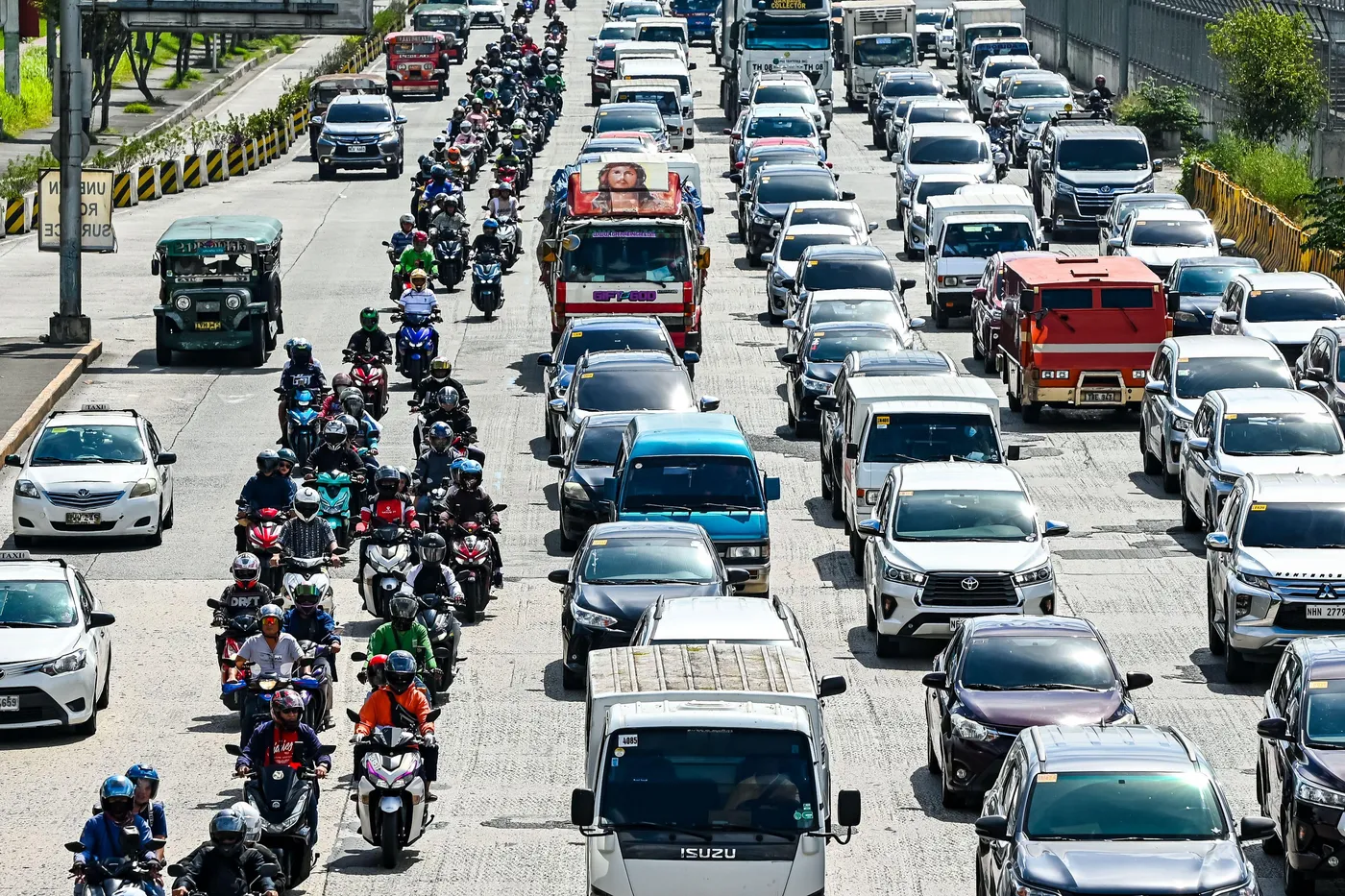
I've lived in the Philippines and worked with car rental customers for more than five years. At E-Rentals Manila, we organise rentals and support through our vehicle network. My advice comes from those customer conversations and my own driving experience: prepare for motorcycles, variable journey times, toll payments and unfamiliar controls, rather than judging Manila traffic only by the videos you have seen online.
Key takeaways
- Check your licence first: The tourist driving allowance and the rental provider's document requirements are separate. Resolve both before paying or travelling.
- Look for motorcycles: Check mirrors and blind spots before turns and lane changes, including in slow traffic. Never assume an indicator means another road user has seen you.
- Give yourself time: A short distance on a map does not establish a reliable journey time. Start with a manageable route and allow for changing conditions.
- Understand the toll account: Ask which RFID arrangements are active, whether cross-network use is enrolled, and how balance and charges will be handled.
- Know the incident procedure: Stop after an accident, prioritise safety, fulfil your legal duties and contact the authorities and rental coordinator as appropriate.
- Choose whether to drive: Fatigue, unfamiliar roads, missing documents or plans to drink are reasons to arrange another driver or suitable transport.
Can a foreigner drive in the Philippines with an overseas licence?
For bona fide tourists and similar temporary visitors who are duly licensed in their home countries, section 21 of Republic Act No. 4136 provides an allowance to drive during, but not beyond, the first 90 days of their stay. Beyond that period, the law requires a Philippine driving licence.
That does not mean every visitor with an overseas card can collect any rental vehicle. Your licence must be current and cover the vehicle you intend to drive. The provider also needs to establish that you meet its rental conditions.
Before your trip, send the coordinator your licence country, the type of vehicle you are licensed to drive, arrival date and rental dates. Ask for the accepted document list and use a verified private channel when sharing identification. Keep your original driving documents available for the journey and handover.
At E-Rentals, we have had rentals that could not proceed because a customer's driving documents were unsuitable or incomplete. I understand why that feels inconvenient after someone has made travel plans. It is much easier to resolve the issue before a flight than while a vehicle is waiting for delivery.
Do you need an International Driving Permit in the Philippines?
Do not assume the answer is identical for every licence or rental. Singapore's Ministry of Foreign Affairs guidance describes the 90-day allowance for a valid home-country licence in English. Non-English licences require particular care: establish the accepted official translation or International Driving Permit documentation with the relevant authorities and your provider before leaving home.
Rental requirements can be more specific than a general travel summary. For example, the UK government's IDP guidance flags an IDP for car hire in the Philippines, while its country advice describes driving on a UK licence for up to 90 days. UK visitors should check those requirements before booking rather than assuming an English-language licence settles every hire condition.
An IDP accompanies your original licence; it does not replace it. Do not assume an IDP or a visa extension automatically extends the Philippine tourist driving allowance. If your plans approach or exceed 90 days, check current Land Transportation Office requirements for obtaining or converting to a Philippine licence well before you need to drive.
What is driving in Metro Manila actually like?
In my experience, many drivers here are more patient than visitors expect. I have seen people give way and wait through congestion. I would not describe every Filipino driver as reckless simply because the roads are busy.
That is my observation, not a claim that traffic is consistently predictable or safe. You will share space with cars, buses, jeepneys, delivery vehicles, motorcycles and pedestrians. Road layout, traffic behaviour and available space can change quickly.
For visitors used to driving on the left, remember that Philippine road traffic keeps to the right. Section 37 of the Land Transportation and Traffic Code sets out that general rule. Take time to adjust your positioning and observation habits before attempting a complicated journey.
Choose a simple first route, preferably when you are rested and conditions are manageable. Set up navigation while parked, check your destination's parking arrangements, and avoid making the first drive a chain of unfamiliar stops across several cities.
If you feel under pressure, pause somewhere safe and reconsider the plan. Being confident enough to rent a car does not oblige you to continue with a journey that feels beyond your current comfort level.
Why should you pay particular attention to motorcycles?
Motorcycles are one of the adjustments I find most demanding. Many riders are responsible, but I have also seen movements that are difficult to anticipate. Riders may be beside you in congestion or approaching a gap that looked empty a moment earlier.
Some foreign customers have told me that this stresses them more than the slow traffic itself. My advice is to build the habit of looking for riders before moving, rather than assuming there is nobody there because another car would not fit.
Check mirrors and blind spots before turning or changing lanes. Signal with enough time for other people to understand your intention, leave space, and avoid sudden steering movements. An indicator is a warning of your plan, not proof that another road user has noticed it or will give way.
Stay attentive when traffic starts moving again after a queue. There may be a motorcycle near either side of the vehicle. Patience is useful here: you do not need to take every available gap.
UK government road-travel advice also recommends caution around motorbikes and scooters and avoiding night driving or dangerous weather where possible. Those are sensible factors to include when choosing your first few trips.
What should you do when a traffic light turns yellow?
A yellow light is not an invitation to accelerate. My practical advice is to anticipate the change and stop safely before the intersection when you can. Do not let a driver behind you pressure you into racing the signal.
At the same time, avoid an abrupt manoeuvre that creates another immediate hazard. Read the signal, your approach speed and the traffic around you early, follow the applicable signs and authorised traffic directions, and leave room to respond safely.
Signals can operate differently from the ones you know at home. The Philippine Information Agency has reported MMDA's move towards adaptive traffic signals. Do not rely on an assumed countdown or a familiar interval to decide whether to rush through.
The same care applies to road markings, turning restrictions and signs. Plan around the current rules for your route, including any vehicle restrictions, rather than copying what the driver ahead does. Navigation software is useful for directions; it is not permission to ignore a sign.
How do RFID toll payments work for a rental car?
Customers sometimes understand the route but have not asked how they will pay for it. This matters if you are travelling from Manila towards places such as Laguna, Batangas, Clark or Subic, or using airport expressways.
Two names you may encounter are Autosweep and MPT DriveHub RFID, previously Easytrip. The operator's official FAQ says Easytrip RFID became MPT DriveHub RFID on 15 November 2026. It also explains that use across the other tollway network depends on enrolment in its One RFID arrangement. A sticker or familiar brand name alone does not establish that every toll road on your itinerary is covered.
During handover, ask the coordinator to explain:
- Active account: Which RFID account or accounts work for this vehicle and your intended route?
- Cross-network use: Is any required One RFID enrolment actually active?
- Balance: What balance is available before you enter a toll road?
- Reloading: Which authorised payment channel should you use, and how do you confirm that a reload has posted?
- Settlement: Who pays the tolls, how is usage recorded, and what happens to any balance you add?
Autosweep's published account terms also place responsibility on the subscriber to monitor and maintain sufficient balance. The practical lesson for a renter is to settle the arrangement before departure, not when you reach a barrier.
Use the operator's reload guidance or the agreed instructions for the actual account. Do not register, replace or change the vehicle owner's account without authorisation. If a tag fails to read, follow tollway staff instructions rather than reversing or trying to improvise your way out of the lane.
How much time should you allow for Manila traffic?
I would not give a visitor one dependable journey time based only on kilometres. The day, time, weather, roadworks and incidents all affect the trip. A route that feels manageable on Sunday morning can be very different during a weekday commute.
Check live conditions shortly before leaving and allow a buffer that suits the consequences of being late. Airport check-in, a business appointment and a flexible lunch outing do not have the same margin for delay.
Also consider what happens at the destination. Finding parking, unloading a family and walking from a car park take time beyond the navigation estimate. If a full day involves several stops, give yourself room to change the order or drop a non-essential visit.
For an airport collection or return, agree on the terminal, meeting point and inspection time separately from your flight schedule. Our NAIA car rental preparation guide covers those arrangements in more detail.
What should you do after an accident in a rental car?
Stop and prioritise immediate safety. Section 55 of Republic Act No. 4136 sets out duties after a road accident, including stopping, providing specified identification when requested and helping a victim. It restricts leaving without assistance, subject to the exceptions stated in the law.
If anyone is injured or there is immediate danger, seek emergency assistance. Contact the police or appropriate traffic authority for the situation, and follow their instructions. Do not leave simply because the rental coordinator has not answered your call.
Contact E-Rentals or your provider as soon as it is safe. We can coordinate with the vehicle provider and explain the rental reporting process. Before the rental begins, ask which emergency contact to use and what police or incident documentation the applicable insurance requires.
If it is safe, photograph vehicle positions, damage, the location and relevant road conditions. Exchange the details required by the authorities and keep an accurate account of what happened. Give truthful information; do not speculate about fault or promise a private repair settlement before understanding the incident and the agreement.
Even a minor collision needs proper handling. A rental vehicle being insured does not establish that every repair, exclusion or third-party claim is covered. Ask for the coverage and your potential liability for the actual unit before collecting it.
When is a chauffeur or another transport option the better choice?
Self-drive offers privacy and control over your schedule. I understand why customers value it. I also think there are times when arranging someone else to drive is the more practical decision.
Do not drive without the appropriate valid documents. If you are exhausted after a long international flight, unfamiliar with the route, or planning a demanding road trip, consider a suitable transfer, a rested approved driver or a separately agreed chauffeur service.
If you expect to drink alcohol, arrange a safe way home in advance. Do not make the decision after the event. Fatigue and distraction deserve the same honest assessment: travelling with family does not make it sensible to push through when you cannot concentrate.
Ask about a chauffeur's agreed service hours, route, waiting arrangements and additional charges. A self-drive price does not include a driver unless your quotation specifically says so. The choice should fit your actual journey and comfort level, not an expectation that every visitor ought to drive.
What should you check before accepting the vehicle?
Inspect the tyres, lights, air conditioning, visible condition, fuel and odometer with the representative. Record existing damage in the handover document and keep your own photographs. Ask for a safe demonstration of unfamiliar controls, including the gear selector, parking brake and lights, before entering busy traffic.
Review the agreement's permitted drivers, destinations, mileage, fuel-return condition, incident procedure and return arrangements. Ask where the relevant vehicle documents are kept. If something seems wrong, raise it before accepting the car; do not assume it will sort itself out once you are on the road.
For the booking process and rental-period choices, read our self-drive car rental guide. This driving guide is about preparing the person behind the wheel as well as the vehicle.
Plan a rental that fits your visit
Tell E-Rentals Manila your arrival and rental dates, licence circumstances, accommodation, passengers, luggage and intended destinations. We will discuss suitable vehicle options and confirm the specific vehicle, documents, payment arrangements and quotation before booking.
You can explore daily self-drive rentals or contact us about your trip, including a separate chauffeur request. Payment upon delivery may be arranged for applicable bookings; agree on the method and any charges beforehand.
I would rather see a customer choose a workable plan than spend the whole trip stressed behind the wheel. Preparation should help you decide when self-drive suits you and when another arrangement makes more sense.
Frequently Asked Questions
Can I drive in the Philippines with my foreign licence for more than 90 days?
Do not rely on the tourist allowance beyond 90 days. Check current LTO requirements for a Philippine licence before that point. A visa extension does not automatically extend your permission to drive on a foreign licence.
Is an International Driving Permit enough on its own?
No. Carry your original valid licence with the relevant permit or translation documentation. Check the requirements for your licence country and rental provider before travel; an IDP does not automatically resolve every rental condition.
Does a rental car's RFID sticker mean all tolls are included?
No. Confirm the active account, route coverage, any required One RFID enrolment, balance and payment arrangement. Toll expenses are separate unless your written booking terms include them.
Should I drive straight after an international flight?
Only if you are properly licensed, rested and comfortable with the conditions. If you are tired or unsure, arrange suitable transport and start self-drive after you have rested.